
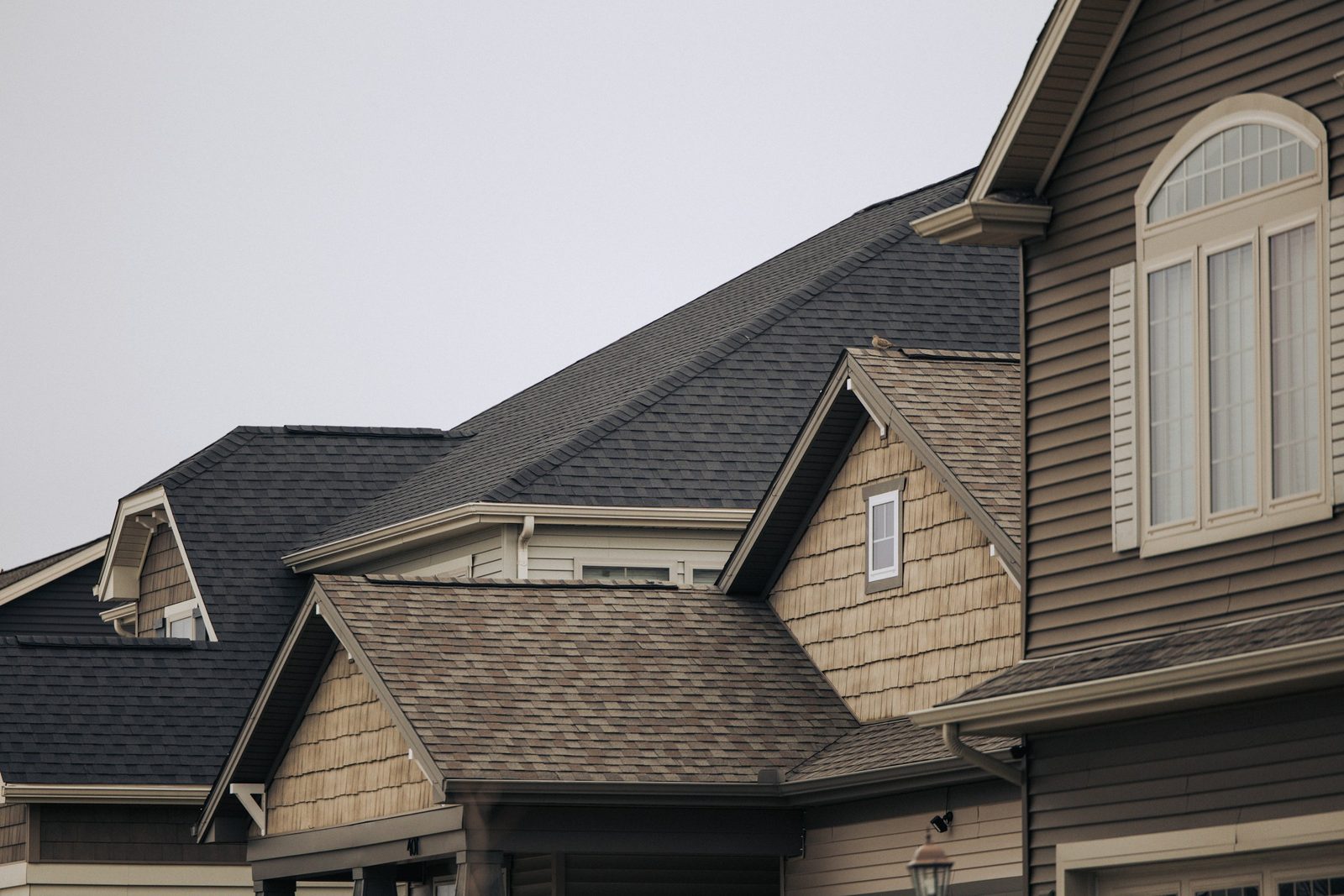
A patch in late fall can be the best money you put into a roof all year. It can also be money you spend twice. Which one you get comes down to five questions, and most homeowners can answer three of them from the driveway and the attic before anyone sets up a ladder.
We'll say this up front because it surprises people: a repair is often the right call. Hearing that from a company that replaces roofs may sound odd. It's still true.
1. Is it one spot, or is it everywhere?
Damage that stays in one place usually gets fixed in one place. That might be a few shingles peeled back at the ridge after a wind event, a cracked rubber boot around a plumbing vent, or a single bent section of drip edge. Those are contained problems with contained answers.
Now step back. Walk all four sides of the house with binoculars, looking at every slope instead of just the one above the ceiling stain. Shingles curling up at the edges or cupping in the middle. Bare patches where the granules are gone and the dark mat shows through. Little piles of granules at the bottom of the downspouts. When those signs show up on every face of the roof, the shingles are wearing out together, and fixing one corner mostly decides where the next leak will appear.
Hail complicates this. The I-25 corridor through Douglas County is one of the most hail-prone stretches of the Front Range, and one storm can bruise every slope even when you only notice one leak. Bruising is hard to see from the ground. We'll show you the hits we find, and we won't push an insurance claim for damage that isn't on the roof.
2. How old is the roof, and how do you find out?
Age changes the math. Every shingle line has an expected service life published by its manufacturer, and a roof near the end of that range is a poor place to sink repair money unless the repair only has to get you to spring.
Plenty of people don't know their roof's age, especially if it came with the house. Places to look:
- The permit record. In unincorporated Douglas County, including Highlands Ranch, Roxborough Park, The Pinery and Perry Park, roofing permits come from the Douglas County Building Division in Castle Rock. Inside the Town of Castle Rock, the town's own building division issues them. Both require a permit for a replacement, so a past re-roof should be on file.
- The inspection report from when you bought the house.
- Your insurance agent, who may have a roof age recorded on your policy.
- Leftover shingle bundles in the garage or crawlspace. The wrapper prints the product name, which you can look up.
- Warranty paperwork from the installer or the manufacturer. Our page on how roof warranties work explains the difference between the two.
If the trail goes cold, a roofer can estimate from the shingle style and its condition. Estimate is the right word, though.
3. Is the decking sound?
Shingles are only the skin. Under them sits the decking, sheets of plywood or OSB nailed to the rafters, and a shingle repair is only as good as the wood holding the nails.
From outside, look for a slope that dips between rafters or a ridge line that sags. The attic tells you more.
Take a flashlight into the attic on a dry afternoon. Dark rings or streaks on the underside of the sheathing, rusted or wet nail tips, OSB that looks swollen and flaky at the edges, and pinpoints of daylight are all worth photographing before you call anyone. Frost on the nail tips on a cold morning usually points to moisture and ventilation trouble (not necessarily a leak).
A soft spot the size of a doormat beside a chimney is a repair. Soft decking across a whole slope is a replacement, because new shingles nailed into tired wood won't hold. Size matters for paperwork too: in unincorporated Douglas County, a repair covering more than one roofing square (100 square feet) needs a permit, and decking work has a way of growing once the old shingles come off.
4. Are you fixing the same leak twice?
The second leak is information.
Water rarely drips straight down. It slips under a shingle, runs along the underlayment or a rafter, and shows up on the ceiling a few feet downslope from where it got in. So a repeat leak usually means the first repair treated the stain instead of the source, or the materials around the patch have failed and the patch is the only good part left.
The usual repeat offenders are flashing details: counterflashing on a chimney, step flashing where a roof meets a sidewall, valleys where two slopes pour into one channel, skylight curbs, pipe boots cracked by the sun. A good roof repair traces the water back to where it enters and rebuilds that detail, which often fixes it for good. If that's been done right and the leak still comes back, or the leaks keep moving to new spots, a third patch doesn't make sense.
5. What does winter weather do to the timeline?
This is where late season changes the answer.
Asphalt shingles rely on sealant strips that bond with warmth. The manufacturer's installation instructions spell out what cold weather requires, sometimes hand-sealing each shingle, and a roof put on during a cold stretch may not fully seal until spring. Shorter days cut working hours. Snow sits on north slopes. The Palmer Divide's higher ground also tends to kick off storms earlier than lower terrain, and a full tear-off leaves a house open until it's dried in.
Inside the Town of Castle Rock, a re-roof also means a full tear-off with no overlays, ice and water barrier and drip edge at the eaves and rakes, and a mid-roof inspection once the roof is dried in. Depending on the property's fire intensity classification on the Colorado Wildfire Resiliency Map, the job may have to meet state wildfire resiliency requirements as well. None of that is a reason to avoid replacing a roof. It's a reason not to cram one into a narrow weather window when the old roof can safely hold.
So a solid repair that keeps water out until spring is often worth more right now than a perfect plan rushed into bad conditions. Not always. Rotten decking, wear on every slope, or leaks in several rooms mean a patch just buys a worse version of the work you'll do in April, and a full roof replacement scheduled around the weather is the honest answer. If storm damage is involved, check your policy's deadline for reporting a claim before you decide to wait.
Which answer you already have
Go back through the first four and mark each one where your honest answer leans toward replacement: wear on every slope, a roof near the end of its manufacturer's expected life, soft decking beyond a small area, a leak you've already paid to fix.
Zero or one mark, and a repair is very likely the right move. Three or four, and you're shopping for a new roof whether the work happens this month or in spring. Two is the gray zone, where someone needs to see the actual roof.
Then bring winter back in. It doesn't decide whether. It decides when, and whether a repair has to carry you there.
If you can't answer the questions yourself, that's what our free inspection is for. Verity Roofing & Exteriors will get on the roof or fly a drone over it, check the attic, and tell you which side you're on, including when the answer is a repair. Call 303-500-1667.