
Roof Warranties Explained:
Manufacturer and Workmanship
Two separate promises protect your new roof. We'll show you what each one actually covers, what can quietly cancel them, and how to keep both intact.
Understand the Two Promises
Behind Every Good Roof
Nobody buys a roof every day. You'll do it once, maybe twice, and the paperwork that comes with it reads like it was written to be skipped. So let's keep this plain: manufacturer and workmanship coverage are two separate promises, made by two separate parties, and you need both.
The manufacturer warranty covers the materials. If the shingles themselves turn out to be defective, the company that made them is on the hook. The workmanship warranty covers the installation, and that one comes from us. Every residential roofing project we build is installed to the manufacturer's written specifications, because that's exactly what keeps their side of the deal enforceable. Our manufacturer certifications back that up, and if you'd rather talk it through than read about it, reach out and we'll walk you through your specific paperwork.
One promise protects you from a bad batch of shingles. The other protects you from a bad install.
Before you sign with any roofer, ask these four questions:
- Who backs the materials, and who backs the installation?
- Is this contractor certified by the manufacturer they're quoting?
- What could I do, or let someone else do, that would void my coverage?
- Will the warranty be registered, and will I get the paperwork to prove it?
If a roofer can't answer all four without checking their truck, keep shopping.
Compare Manufacturer
and Workmanship Coverage
Here's how the two warranties divide the job of protecting your roof.
| Question | Manufacturer Warranty | Workmanship Warranty |
|---|---|---|
| What does it cover? | Defects in the roofing materials themselves: shingles, underlayment, and system components. | The quality of the installation: fastening, flashing, ventilation details, and everything our hands touched. |
| Who stands behind it? | The company that made your roofing system. | Verity Roofing & Exteriors. You call us, we come out. |
| What's a typical claim? | Shingles failing well before they should under normal conditions. | A leak traced back to a flashing or fastening detail. |
| What strengthens it? | Installation by a certified contractor, correct registration, and proper attic ventilation. | A written scope, photo documentation, and a final walkthrough you attend. |
| What weakens it? | Unauthorized penetrations, pressure washing, layover installs, and unapproved repairs. | Another contractor altering our work without telling us. |
Warranty terms differ by manufacturer, product line, and coverage tier, so we don't quote durations on a web page. Anyone who does is guessing about a roof they haven't seen. We put the exact terms for your system in writing before you sign, and we'll happily explain every line.
See Why Manufacturer
Certifications Change Your Coverage
Manufacturers Save Their Best Coverage for Contractors They Trust
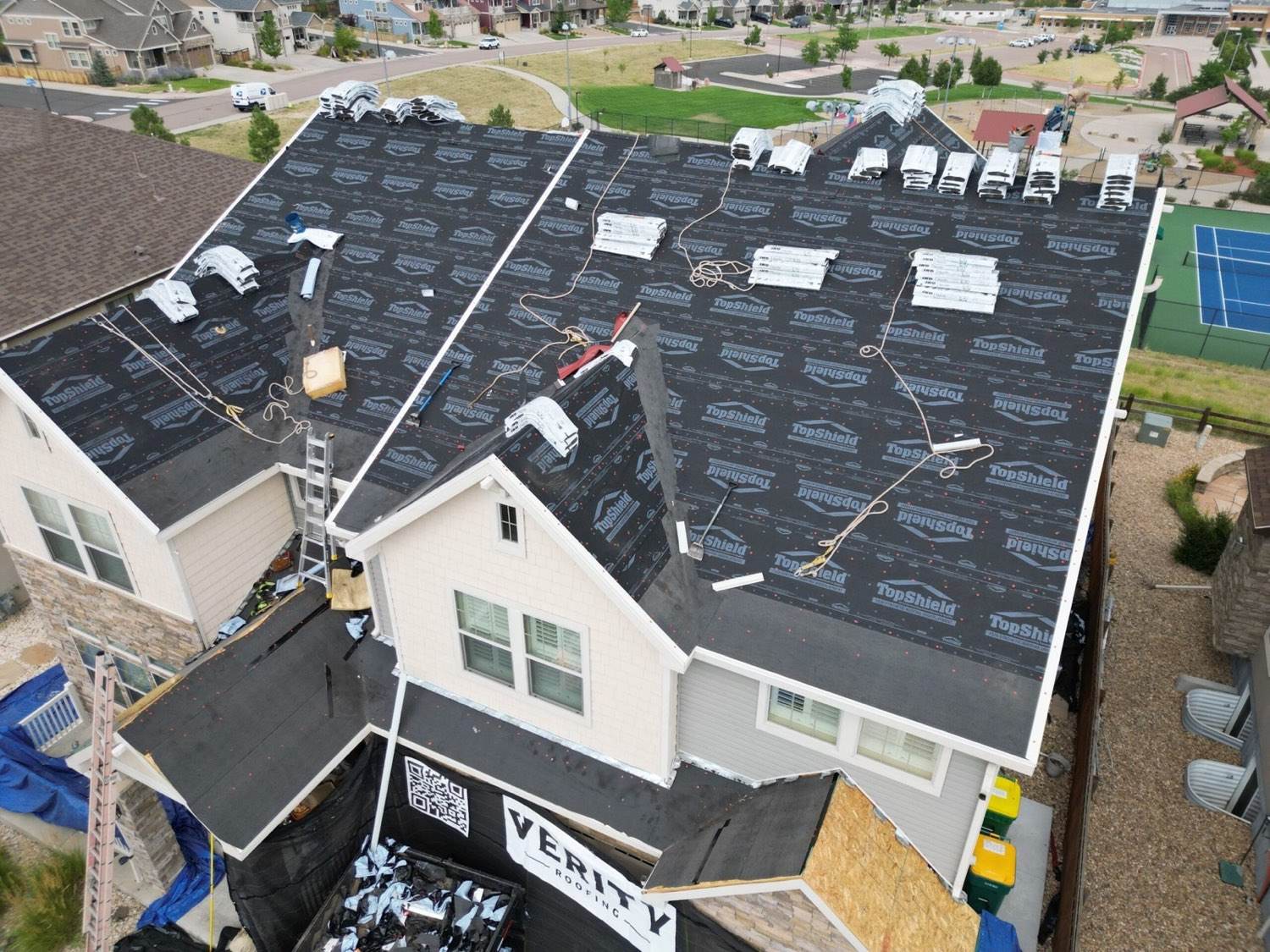
Here's the part most homeowners never hear. Shingle manufacturers offer their strongest warranty tiers only through contractors they've vetted, trained, and certified, because they won't guarantee a system installed by someone they don't know. It's their name on the label.
Verity holds certifications including TAMKO Platinum Pro, Owens Corning Preferred Contractor, CertainTeed ShingleMaster, AtlasPRO+ Select, and IKO RoofPro Silver. That standing lets us offer enhanced coverage options that non-certified installers simply can't, and it means the manufacturer has already checked our work. You can see the full list on our certifications page.
The certification protects you twice. Once during installation, and again for every year the warranty stands behind it.





Avoid the Mistakes That Void Roof Warranties
Most voided warranties aren't the roofer's fault or the manufacturer's. They're accidents of ownership, and they're avoidable.
Unauthorized Penetrations
Satellite dishes, solar mounts, holiday light anchors, swamp cooler brackets. Every hole punched through your shingles by an uncoordinated trade is a potential exit ramp for your coverage. Call us before anyone drills.
Pressure Washing
It looks satisfying and it ruins roofs. High-pressure water strips the protective granules off asphalt shingles, ages them fast, and gives the manufacturer a clean reason to deny a claim. Don't let anyone sell you this service.
Layover Installs
Some roofers nail new shingles over the old layer to win the bid on price. Manufacturers generally won't extend their best coverage over a layover, and the shortcut hides deck damage you'll pay for later. We'll tell you to tear off, every time.
Unapproved repairs are the quiet warranty killer. A handyman patch or another roofer's quick fix on our installation can compromise both warranties at once. If something on your roof needs attention, even something small, call us first. If it's a minor roof repair, we'll fix it as a repair. We don't turn small problems into big invoices.
Keep Your Warranty Paperwork
Working for You
A warranty you can't find, or never registered, is a warranty you don't have. Here's how we handle it.
- Everything in writing before we start
Your contract names the exact products going on your roof and the coverage that comes with them. No verbal promises, no fine print surprises.
- Installation to manufacturer spec
Fastener patterns, underlayment, flashing, ventilation. We follow the written specification because your coverage depends on it, and we photograph the work as we go.
- We register your warranty
Enhanced manufacturer coverage usually requires registration after installation. We submit it for you rather than leaving it on your to-do list, where these things tend to die.
- You get the full packet
At the final walkthrough you receive your warranty documents and photo documentation. Keep the packet with your home records. It matters at claim time and again when you sell.
- Call us before anyone touches the roof
Solar installer coming? New satellite dish? One phone call keeps the work coordinated and your coverage intact. That's what we're here for.
Roof Warranty Questions, Answered Honestly
What's the difference between a manufacturer warranty and a workmanship warranty?
The manufacturer warranty covers the roofing materials against defects, and it comes from the company that made them. The workmanship warranty covers the installation, and it comes from us. You need both, because a materials warranty won't pay for an installation mistake, and a workmanship warranty won't cover a defective shingle.
How long do roof warranties last?
It depends on the manufacturer, the product line, and the coverage tier, so we won't quote a number here. Anyone who gives you a blanket answer before knowing your exact system is guessing. We put the specific terms for your roof in writing before you sign anything.
What can void a roof warranty?
The usual culprits are unauthorized penetrations from things like satellite dishes or solar mounts, pressure washing the shingles, and layover installations over an old roof. Unapproved repairs by another contractor can also hurt your coverage. When in doubt, call us before any work touches your roof.
Do roof warranties need to be registered?
Enhanced manufacturer coverage often requires registration within a set window after installation, and an unregistered warranty may default to lesser coverage. We handle the registration for you and hand over the paperwork at your final walkthrough, so keep that packet with your home records.