Two inspectors can look at the same roof and come back with different reports. Sometimes that is a difference in honesty. More often it is a difference in method.
What a boot on the shingles can do
Walking the roof is the only way to feel it. An inspector can press a shingle and tell whether the mat has gone soft, check sealant at every penetration, look at the pipe boots and flashing from a foot away, and test whether a tab lifts. The camera cannot press anything.
Walking has limits. Steep pitches put the inspector at risk. Fragile materials can crack under boot traffic, so the inspection can cause the damage it is looking for. And you cannot see a whole slope while standing on it, only the part around your feet.
What a drone can do
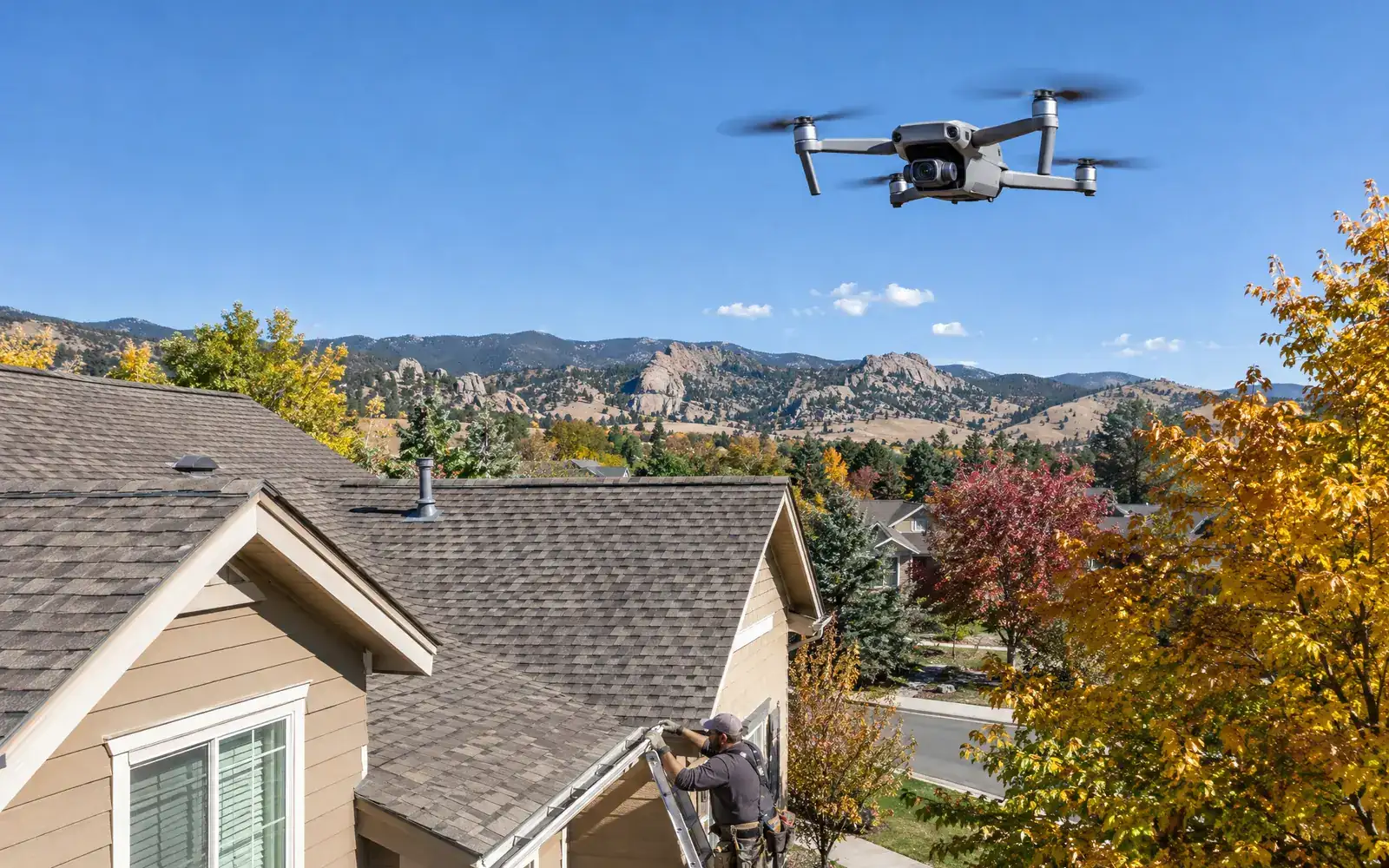
A drone flies every slope at close range without touching one. Overhead imagery shows an entire roof plane in a single frame, so a pattern such as scattered hail bruising becomes visible as a pattern instead of a handful of arguable spots. It reaches steep, complex and multi-story roofs without a ladder.
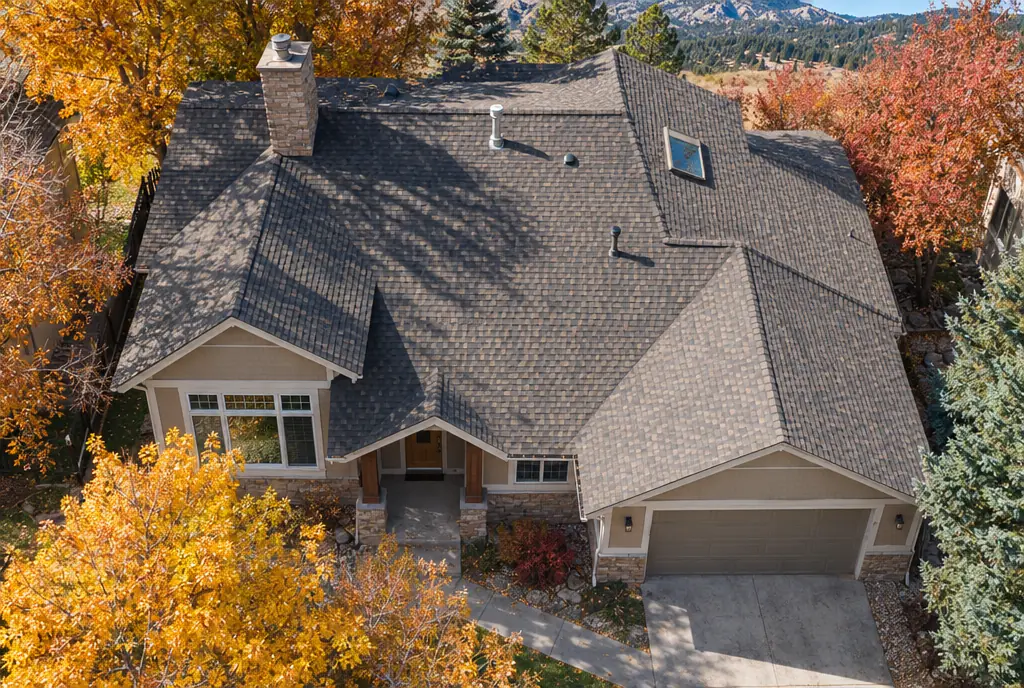
What a drone cannot do is touch. It cannot tell a soft bruise from a firm one, and it cannot lift a tab or press sealant. Good imagery narrows where to look. It does not replace looking.
| Question | On-roof walk | Drone imagery | Both together |
|---|---|---|---|
| Steep or fragile roof? | Risky, can cause damage | Safe, no foot traffic | Drone first, targeted walk only where safe |
| Is a bruise soft? | Yes, by touch | No | Yes |
| Does damage form a pattern across a slope? | Hard to see up close | Easy to see | Easy to see and confirm |
| Sealant and flashing detail | Yes | Limited by resolution | Yes |
| Paper trail for an adjuster, buyer or board | Good photos, narrow views | Wide views, full coverage | Strongest |
Ask any inspector which method they plan to use and why. If they say "whatever I feel like" for a steep or fragile roof, ask for the drone.
The messy middle: the walk that breaks what it checks
Picture a brittle old tile or a thin cedar shake roof on a cold morning. An inspector steps onto it to confirm a suspicion and cracks a piece. Now there is a new defect, and nobody can prove who made it. The fix is not to skip the inspection. It is to choose the method that does not need a footstep. Fly it, photograph it, then decide whether a walk is worth the risk.
How to choose for your roof
- Start from the roof, not the tool. Steep, multi-story, fragile or complicated roofs lean toward a drone.
- Start from the reason. Storm claims and roof certifications call for both: ground truth plus complete imagery.
- Ask what you will receive. A written condition report in plain English, a labeled photo set, drone imagery when the roof calls for it, and a straight recommendation.
- Ask who keeps the files. The report and photos should be yours whether you hire the inspector or not.
Verity's roof and drone inspections work this way, and they are free. The documentation is yours to keep. If hail is the reason you are looking, read what hail damage you cannot see from the ground looks like first, and if the findings point to a storm, our insurance claim guidance picks up where the report ends.
Have these ready before the inspection
An inspection goes faster and says more when the inspector has a little history. None of this is required, but all of it helps.
- The year the roof was installed, if you know it, and who installed it
- Any past repairs, leaks or claims, with dates
- Where attic access is, and a clear path to it
- Any photos you have from earlier years, even bad ones
- The reason you are asking: a storm, a purchase, a sale, or just age
The reason matters because it decides the method. A storm claim wants the strongest paper trail, which the walk and the drone give together. A buyer or seller wants the condition in writing, which is a roof certification. A homeowner with an older roof wants a straight read on its remaining life. The same roof can need a different report depending on the question.
One last thing worth doing: ask for the inspection in October, not in the first week of snow. Drone imagery of a clean, dry roof is far more useful than a photo of a roof under six inches of white.