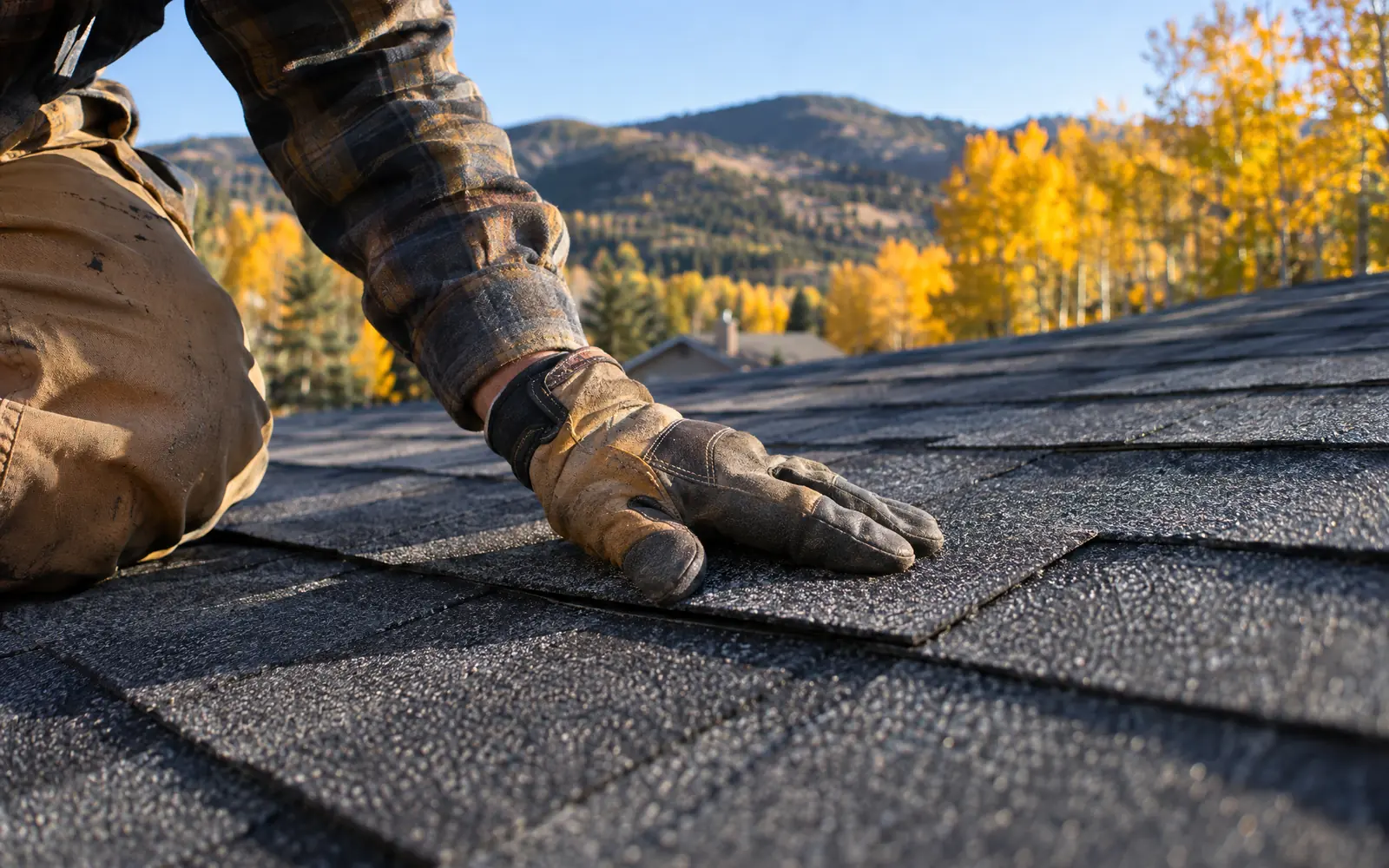
A new shingle roof is not finished when the last nail goes in. It is finished a few warm afternoons later, when the sun has bonded every course to the one below it. Until then, the roof is held down by nails and very little else.
What the seal strip actually does
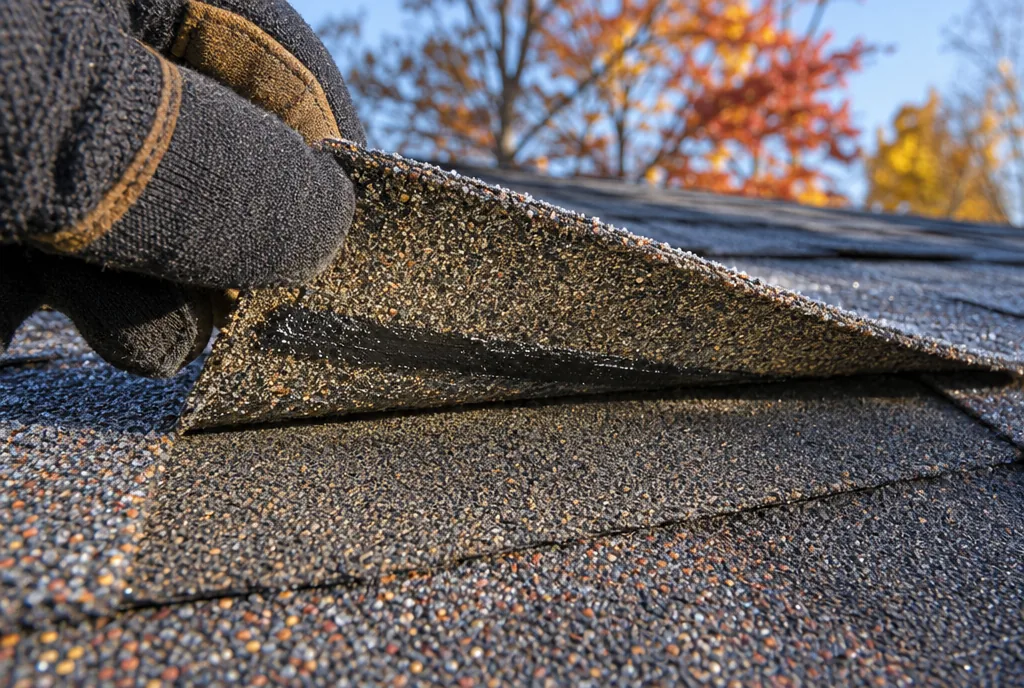
Each asphalt shingle leaves the factory with a line of adhesive. Sun softens it, the weight of the next course presses it flat, and as it cools it grips. That bond keeps the tabs from lifting in a Front Range wind. Nails fasten the shingle to the deck. The seal fastens the shingles to each other.
Heat does the work, and cold stalls it. Grit stalls it too. A film of dust on the shingle surface gives the adhesive nothing clean to grab, which is one reason roofers sweep before they stack.
Why Colorado makes the timing tricky
A Front Range afternoon can feel like spring while the same night dips below freezing. That swing helps and hurts. A south-facing slope in direct sun can bond a shingle in an afternoon. A north slope, or a valley that never sees the sun in October, can stay cold enough that the adhesive sits dormant until spring.
| Install-day conditions | What the adhesive does | What manufacturers' instructions usually call for |
|---|---|---|
| Warm, sunny, dry | Softens within hours and bonds | Standard nailing pattern |
| Cool but sunny | Bonds slowly, slope by slope | Standard nailing, then a check of shaded slopes once it warms up |
| Cold or shaded all day | May not bond until warmer weather | Hand-sealing the tabs with asphalt roofing cement |
| Cold and windy | Loose tabs can lift and crease | Limit how much roof is open, or wait |
Each manufacturer sets its own temperature thresholds, and they differ by product line. The bundle wrapper and the installation instructions on it are the authority, not a rule of thumb from a neighbor.
The common failure point is a roof that looks perfect from the street. An unsealed shingle lies flat. The first strong gust finds the loose tab edges and starts lifting them, one course at a time.
The messy middle: cold shingles crack, and forecasts change
Shingles stiffen in the cold. A tab that bends easily on a warm day can crease when it gets carried up a ladder at 25 degrees. Fastening is the other pinch point. A nail driven too deep, or at an angle, holds poorly, and manufacturers publish exact nail counts and placement for a reason.
Then there is the forecast. A crew starts a replacement on a Monday and the weather turns on Wednesday. The usual answer is to dry the roof in: underlayment down, flashing set, the deck protected. That buys time, but not unlimited time. Underlayments carry exposure limits set by their makers, so a half-finished roof cannot sit through a whole winter.
Five questions before a late-season start
- What does the manufacturer's instruction sheet say about temperature for this exact shingle?
- Which tabs will be hand-sealed, and who decides?
- How much of the roof is open at the end of each day?
- What is the plan if the forecast flips midweek?
- Who walks the finished roof for unsealed tabs once real warmth returns?
At Verity, residential roofs are installed to the manufacturer's written specifications, because the manufacturer's coverage depends on it. Our warranties page explains what each warranty covers and what quietly cancels it. A late-season install is where that discipline gets tested.
Wait or go? A short decision list
- If water is coming in now, stop the leak first. A roof repair or a temporary dry-in is not the same decision as a full replacement.
- If the roof is old but dry, a spring start costs you nothing in protection and gives the adhesive its best conditions.
- If the roof is hail-damaged and the claim is already moving, ask the contractor how the schedule changes in a cold snap before you agree to a date.
- If a crew wants to start in a cold week and cannot explain how the tabs will bond, keep asking.
What to ask your contractor this week
Ask for the start window and the temperature plan in writing. A contractor who has a plan for cold mornings will tell you what happens to a section that goes down on a cold day.
If you are not sure which of those fits your roof, a free roof inspection comes with photos and a plain answer on how much life is left. Our winter readiness walkthrough covers the checks you can do from the ground. Questions go to 303-500-1667.